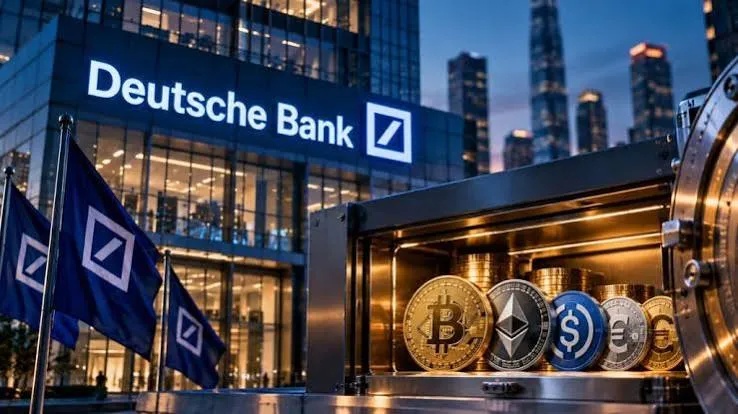
Ripple Gets Final US Banking Approval: What It Means for RLUSD and Crypto
Published: October 27, 2026
Coverage: Crypto Web3 | Regulation | Digital Finance
The Big News: Ripple Moves Closer to Traditional Finance
Ripple announced on October 26, 2026, that the US Office of the Comptroller of the Currency (OCC) had granted final approval for the chartering of Ripple National Trust Bank (RNTB).
The announcement marks an important regulatory development for Ripple, a company that has spent years building blockchain-based payment and digital asset infrastructure for financial institutions and enterprises.
Rather than focusing only on cryptocurrency trading, Ripple is positioning its business around payments, custody, stablecoins and institutional financial services.
The proposed national trust bank is intended to strengthen the regulatory infrastructure supporting Ripple USD (RLUSD), Ripple's US dollar-backed stablecoin.
However, an important distinction matters: a national trust bank is not the same as a conventional commercial bank offering every type of banking service.
1. What Exactly Has Ripple Announced?
According to Ripple's October 26 announcement, Ripple National Trust Bank received final approval following the conditional approval granted in December 2025.
The bank's approved activities include three important functions:
Reserve management: Managing segregated reserves supporting RLUSD.Collateral trusteeship: Acting as trustee for RLUSD reserves for the benefit of stablecoin holders.Digital asset custody: Providing fiduciary custody services for digital assets.These activities could help Ripple serve businesses that require regulated infrastructure to hold and manage digital assets.
For financial institutions, regulatory oversight can be an important consideration when selecting a provider for payments, custody and treasury operations.
Nevertheless, the precise operating arrangements and the bank's commencement of business remain subject to the applicable regulatory requirements.
2. Why RLUSD Is at the Centre of This Story
RLUSD is Ripple's US dollar-backed stablecoin, launched in December 2024.
Unlike Bitcoin, whose market price fluctuates with supply, demand and market sentiment, a dollar-backed stablecoin is designed to maintain a value close to one US dollar.
Stablecoins can support digital payments, transfers and trading activities without requiring users to move between traditional banking systems and volatile cryptocurrencies for every transaction.
Ripple stated on October 26 that RLUSD had reached a market capitalisation of approximately $2.5 billion.
The company also said that RLUSD is backed by US dollar deposits, US government securities and other cash equivalents. BNY serves as its primary reserve custodian, and Ripple publishes monthly independent third-party attestations covering the circulating supply and reserve assets.
These figures and reserve descriptions are company-reported information, not a guarantee that RLUSD is risk-free.
The proposed national trust bank could add another layer of federal oversight to the infrastructure supporting RLUSD. However, RLUSD will continue to be issued by Standard Custody & Trust Company, a limited-purpose trust company regulated by the New York Department of Financial Services.
That distinction is crucial: the new bank is not replacing RLUSD's existing issuer.
3. What Is a National Trust Bank?
A national trust bank is a federally chartered institution focused on trust, fiduciary and related authorised activities.
Its responsibilities differ from those of a conventional commercial bank.
Depending on its charter and permissions, a national trust bank may hold assets on behalf of clients, provide custody services and perform other authorised fiduciary functions.
It should not automatically be assumed to operate like a retail bank that accepts ordinary customer deposits, issues credit cards and makes consumer loans.
For Ripple, the strategic attraction is the ability to develop institutional digital asset services within a federally supervised framework.
This could matter to enterprises that want to integrate blockchain technology into their existing financial operations but require clearly defined regulatory responsibilities.
4. The Important Detail: Approval Status Needs Careful Reporting
Ripple's announcement on October 26 described the charter as having received final OCC approval.
However, reports published on October 27 highlighted a discrepancy: the publicly available OCC records appeared to continue showing the earlier conditional-approval status.
That does not, by itself, establish that Ripple's announcement was incorrect. It does mean that readers should distinguish between the company's announcement and the regulator's publicly displayed records.
The next step for independent reporting is to verify the final decision directly against updated OCC documentation and any applicable opening conditions.
Until the regulatory record is clear, it would be premature to describe the bank as fully operational.
This is a useful reminder for anyone covering financial technology: regulatory approval, permission to commence operations and the actual launch of a service can be separate milestones.
5. How Could Ripple Benefit Commercially?
The potential commercial opportunity extends beyond the stablecoin itself.
Institutional custody
Financial institutions and enterprises need systems for safeguarding digital assets, managing access and meeting internal compliance requirements.
A federally supervised trust bank could strengthen Ripple's offering to customers seeking institutional custody services.
Stablecoin infrastructure
RLUSD can serve as part of Ripple's broader payments and digital finance ecosystem.
If institutional demand grows, services surrounding stablecoins—including custody, reserve management and payments infrastructure—could become important sources of business activity.
Enterprise relationships
Ripple's strategy focuses heavily on businesses and financial institutions rather than relying solely on retail cryptocurrency traders.
Regulatory clarity could make it easier for some organisations to assess Ripple's services against their internal risk and compliance requirements.
However, regulatory approval does not guarantee customer adoption, revenue growth or market leadership.
6. What Does This Mean for XRP?
Ripple and XRP are closely associated in the crypto market, but they are not the same thing.
Ripple is a company. XRP is a digital asset that operates on the XRP Ledger.
Ripple's banking development may influence how investors perceive the company's broader ecosystem, but it does not automatically create a direct increase in XRP's price or guarantee additional token demand.
The actual effect would depend on several factors, including the extent to which Ripple's services expand, how those services use XRP, market conditions and investor expectations.
Readers should therefore avoid treating a corporate regulatory announcement as a guaranteed trading signal.
7. The Bigger Picture: Crypto Is Building Regulated Financial Infrastructure
Ripple's announcement fits into a broader development across the digital asset industry: crypto companies are increasingly seeking regulated structures to serve institutional customers.
Stablecoins, custody services and blockchain-based payment infrastructure are becoming important areas of competition between crypto-native companies and traditional financial service providers.
The challenge is to combine the speed and programmability of blockchain technology with the governance, transparency and safeguards expected in regulated finance.
For Ripple, the national trust bank could become an important part of that strategy if the institution completes the applicable requirements and begins operating as intended.
Final Takeaway
Ripple's announcement is more than a headline about a banking charter. It highlights the growing competition to build regulated infrastructure around stablecoins and institutional digital assets.
The potential opportunity lies in custody, reserve management and enterprise financial services—not simply in cryptocurrency price movements.
Yet the most important questions remain practical: when will the bank begin operating, how will its services develop, and will institutional customers adopt them at meaningful scale?
Those answers will determine whether this regulatory milestone becomes a lasting commercial advantage.
Editorial Sources
1. Ripple's official announcement, October 26, 2026: https://ripple.com/ripple-press/ripple-receives-final-occ-approval-to-establish-national-trust-bank/2. The Block's reporting on the approval and regulatory structure: https://www.theblock.co/news/regulation/2026-10-26-ripple-gains-final-occ-approval-rlusd-4318103. OCC's December 2025 announcement on conditional trust bank charter approvals: https://www.occ.gov/news-issuances/news-releases/2025/nr-occ-2025-125.htmlReporting note: Verify the OCC's latest public charter records before publishing any update that states the bank is operational or that its regulatory status has changed further.


 reuters